UGC (User Generated Content): What It Is, How It Works, and How to Activate It for Your Brand
Published on
Written by
UGC (user-generated content) is content produced by real people or selected creators, used by brands on their own channels to drive authenticity, trust, and conversions. It is the advertising format with the highest ratio of production cost to performance. The numbers are consistent: UGC ads deliver 4x higher CTR and up to 50% lower CPA than traditional creative.
But the term itself has shifted. Here is what changed, and why it matters before you plan your next campaign.
What UGC meant then, and what it means now
When "UGC" first entered marketing language, it described something spontaneous. An Amazon review from a real customer. A TikTok posted by someone talking about a product no brand had paid them to mention. A photo on Instagram tagged with a hashtag because the person actually liked the thing.
That kind of UGC is authentic by nature. It is also uncontrollable. You cannot schedule it. You cannot brief it. You cannot optimize a creative you did not commission.
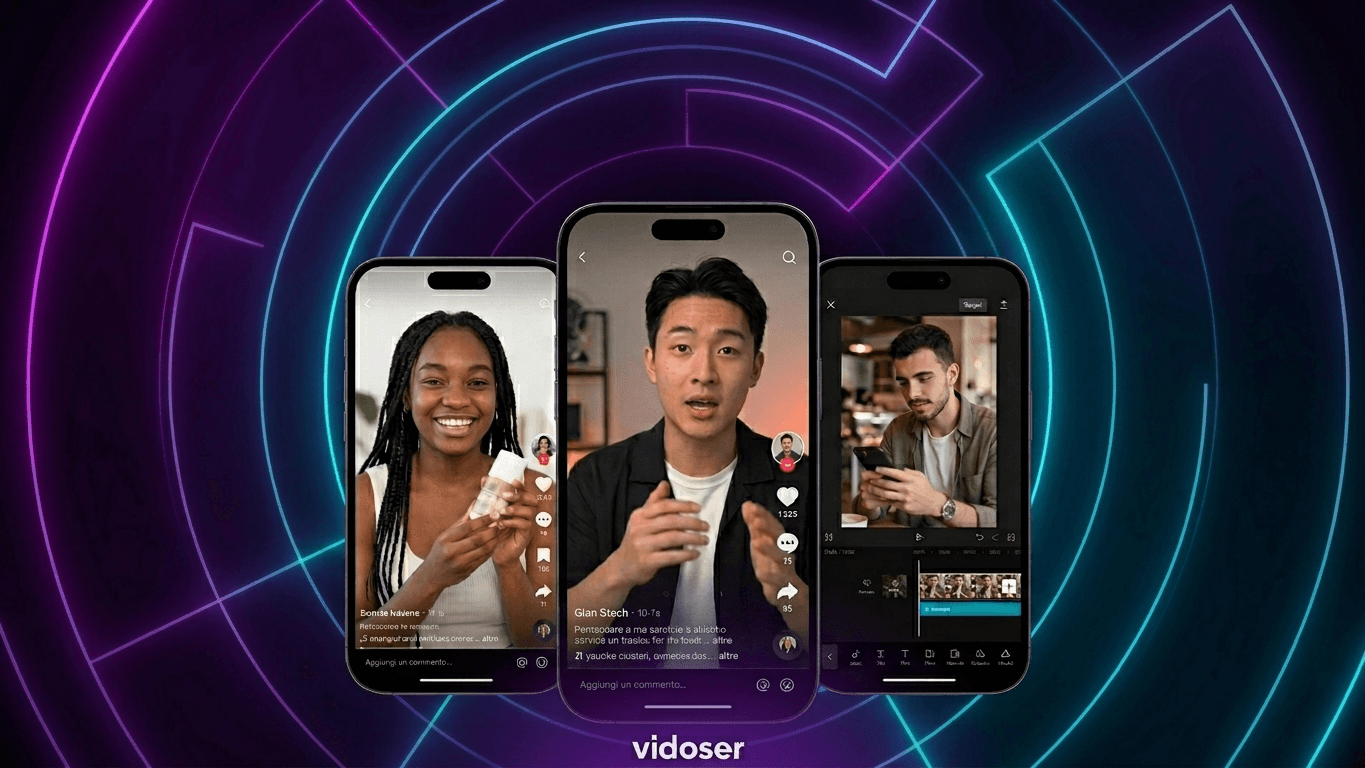
In 2026, when marketers say UGC they mean something different. They mean content produced by UGC creators: specialists engaged by the brand to produce native-looking material. Authentic in feel, even when planned in the brief. The brand receives the footage, approves it, and distributes it across its own paid and organic channels. The creator does not post it on theirs.
This distinction is not academic. It completely changes how you pick the person behind the camera.
Who a UGC creator is, and why their following does not matter
A UGC creator specializes in producing native-style video and photo on behalf of brands. They deliver the files. They transfer usage rights. They do not publish.
Their follower count is irrelevant to you. What matters is production capability: how natural they look on camera, how closely they hit a brief without losing the authentic feel, how well they know the native formats of each platform, how fast they turn a concept into a shippable asset.
Vidoser works with more than 50.000 creators across 30+ countries. A large share of that pool are UGC specialists segmented by category: food, beauty, tech, fashion, sport, home.
"Fit beats followers. Always. A creator with 8.000 followers in the right niche converts better than one with 500.000 generic followers. The campaign data confirms it systematically."
Alessandro La Rosa, CEO, Vidoser
The top-performing UGC formats
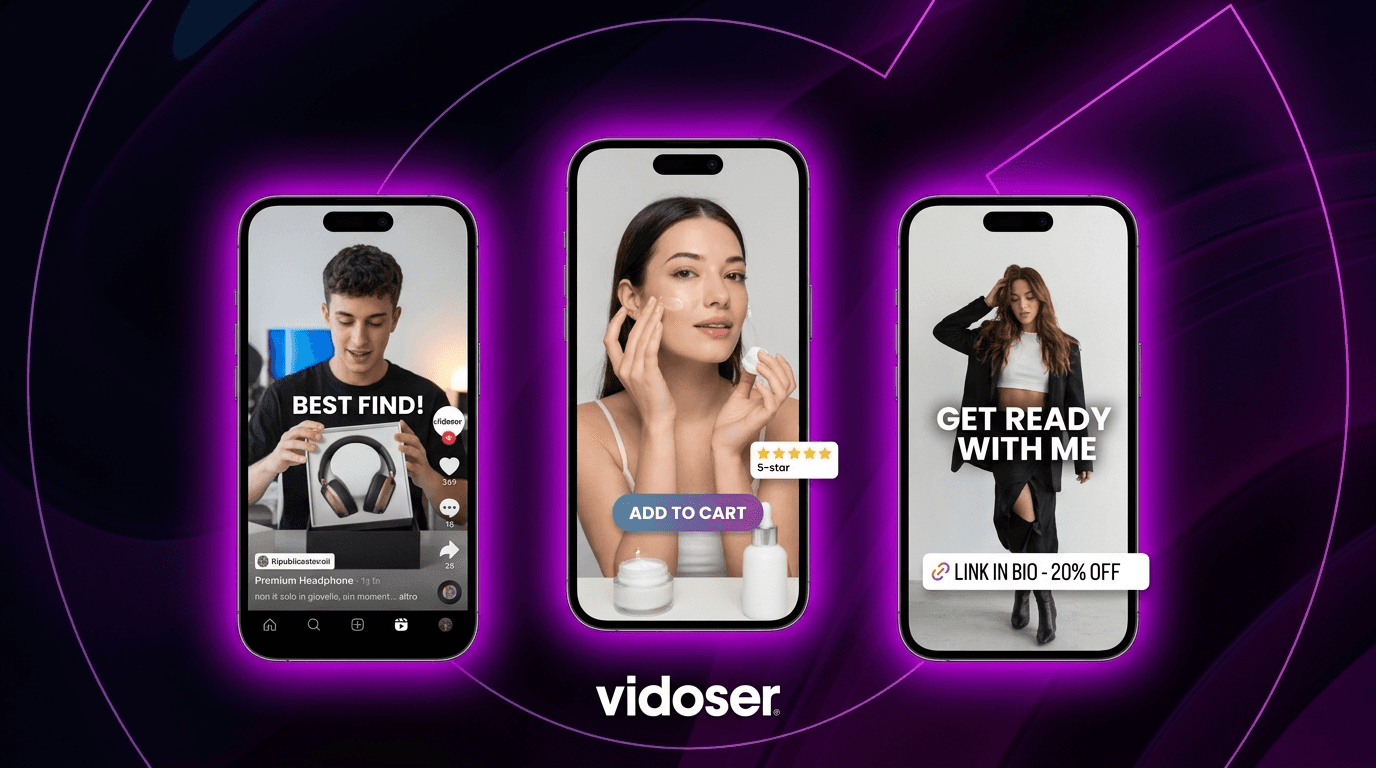
In-use video. The creator films the product inside their own daily context. The brief fixes the scenario and the tone; execution stays with the creator. That is the trade that makes it look real.
Hook + benefit + CTA in 15–30 seconds. The format built for paid. The first three seconds stop the scroll. The next ten deliver the single benefit that matters. A direct call to action closes the video. Nothing more.
Video review. The creator looks into the lens and tells their experience with the product. It is the highest-trust format because it simulates a recommendation from someone the viewer has no reason to distrust.
Tutorial and how-to. Step by step, the creator shows how to use the product. This format earns long watch time and high engagement, especially in beauty, food, and tech.
How to activate UGC in four steps
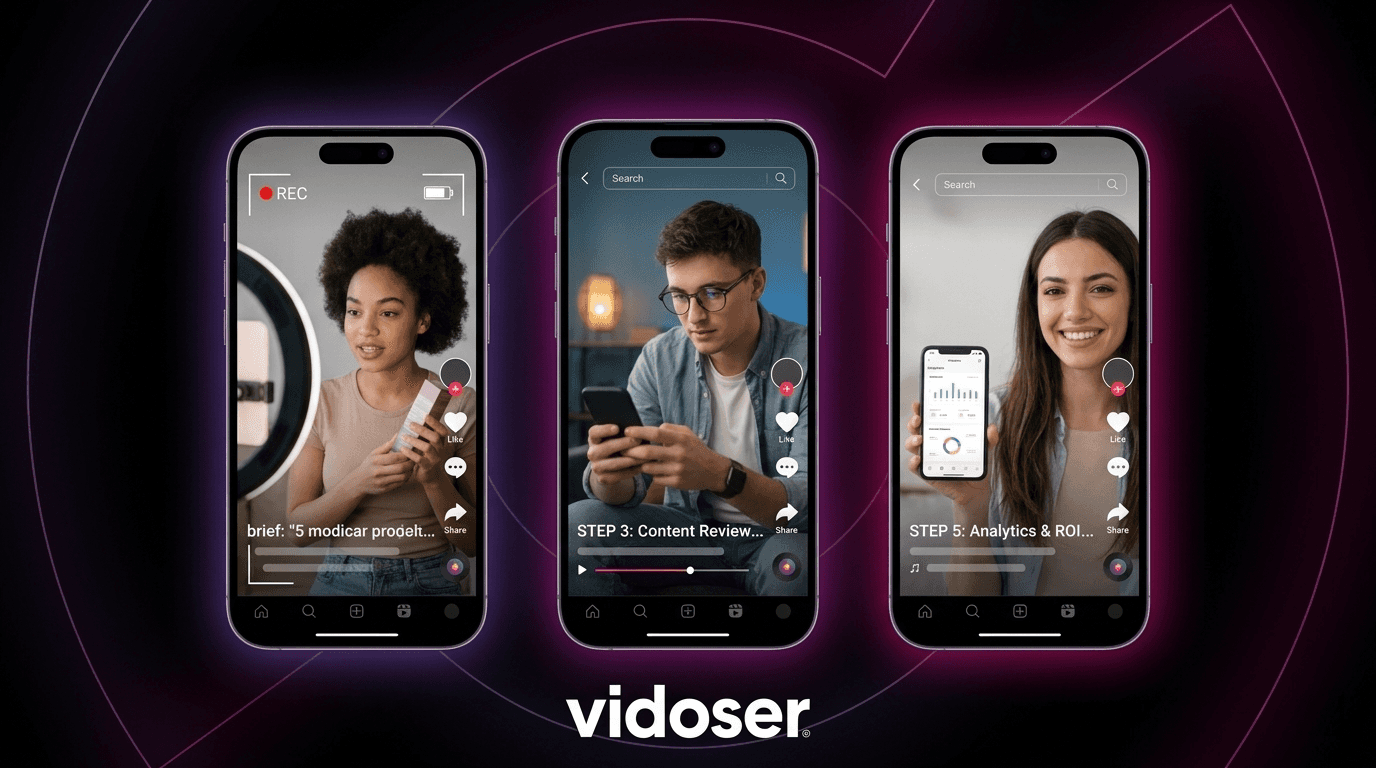
1. Write a precise brief
A good UGC brief fixes content objective, format and duration, opening hook, key message, CTA, tone, and the list of things to avoid. Everything else is the creator's space.
2. Select the creator by portfolio, not by audience size
Watch their previous UGC work. Look for natural presence, ability to follow a brief, consistent production quality, and stylistic fit with your brand.
3. Define usage rights before production
The contract fixes the channels where the content can run, the duration of use, whether advertising is permitted, and whether edits are allowed. Agreeing this after the shoot is the most common expensive mistake.
4. Test, measure, iterate
Launch three different versions of the same concept. Measure. Use the data to brief the next round. This is the loop that compounds.
UGC in ads: the highest-ROI use case
When a UGC video that performs well organically is promoted as a Meta or TikTok ad, the algorithm distributes it more efficiently, the audience watches it longer, and the conversion metrics move in the right direction.
Among brands running paid campaigns with Vidoser that have integrated UGC into their creative rotation, ROAS improves by 30% to 50% in the first month. The budget did not grow. The creative did.
Talk to the Vidoser team to see how to integrate UGC into your paid creative strategy.
You may like