Influencer Marketing for E-commerce: Strategies That Drive Sales in 2026
Published on
Written by
For e-commerce brands, influencer marketing is not a brand awareness play. It is a sales channel. The brands that treat it as one, with the same tracking discipline and performance mindset as paid social, see measurable returns. The ones that treat it as PR spend money and guess at results.
Why Influencer Marketing Works Differently for E-commerce
E-commerce brands have one structural advantage over service businesses when it comes to creator marketing: every conversion is traceable. A product purchase triggered by a creator post can be attributed via promo code, UTM link, or pixel data. This makes optimization possible in a way that is simply not available to most B2B or service businesses.
It also changes the selection criteria. For an e-commerce brand, the right creator is not the one with the largest following. It is the one whose audience has the highest purchase intent for your product category.
The Formats That Drive E-commerce Sales
Product Review Videos
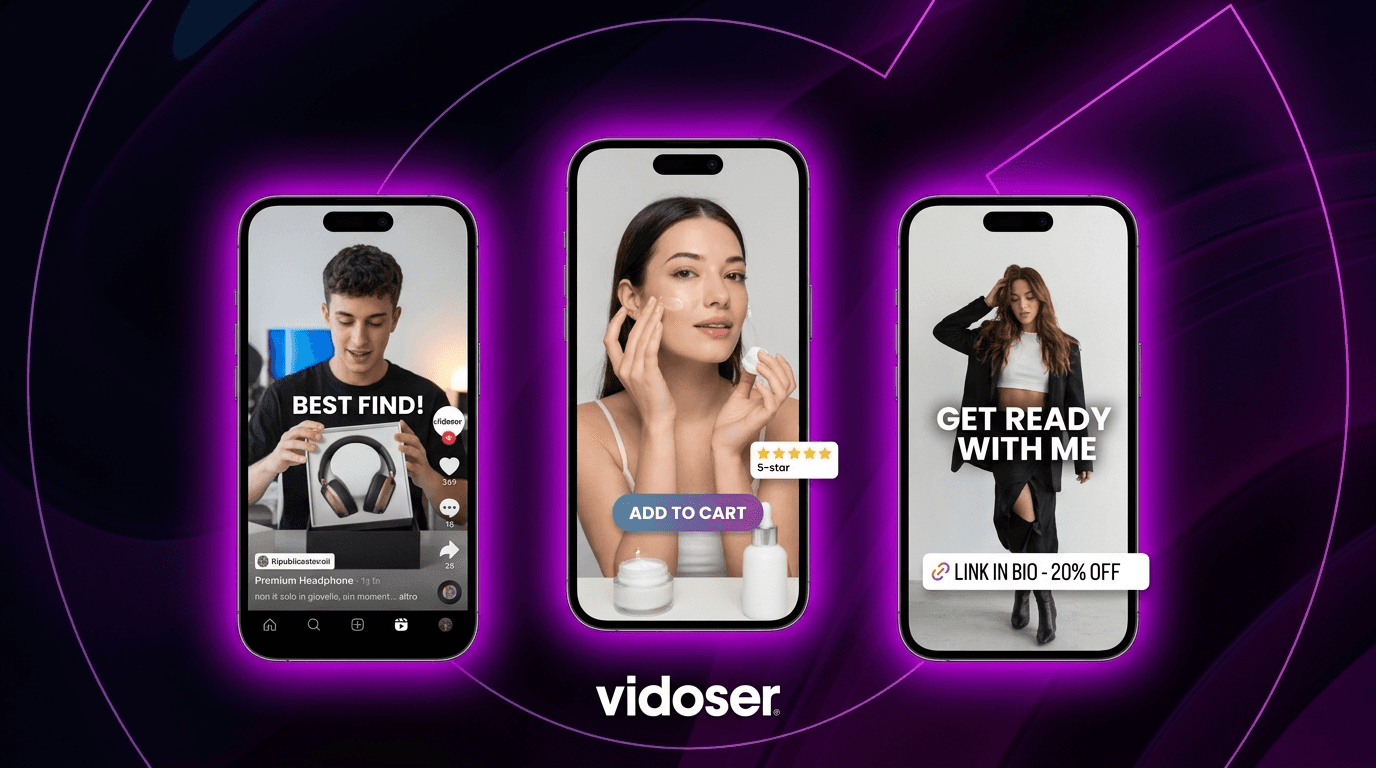
The creator tries the product on camera and shares an honest opinion. This format works because it simulates the recommendation of a trusted friend rather than an advertisement. The video must include a direct purchase link or promo code in the caption or pinned comment. The CTA should be specific: not "check the link in bio" but "use code [CREATOR] for 15% off, link in bio."
Unboxing and First Impression Content
Unboxing videos generate high engagement because they tap into anticipation and curiosity. They work best for products with strong packaging, a premium feel, or a surprising reveal. The format is native to TikTok and YouTube Shorts and performs well as organic content that can then be amplified as paid.
Tutorial and How-To Content
The creator shows how to use the product, step by step. This format drives both trust and conversion because it removes the main purchase barrier: uncertainty about whether the product will work for me.
UGC for Paid Ads
The brand commissions creators to produce raw, native-style video content, not for the creator channel, but for use as ad creative on Meta and TikTok. UGC ads perform structurally better than studio-produced ads: they have lower CPM because the algorithm classifies them as native content, and higher CTR because users stop for content that looks authentic.
Social Commerce: TikTok Shop and Instagram Shopping
Social commerce removes the friction between discovery and purchase. Instead of driving traffic to an external site, creators integrate shoppable links directly into their content. The user sees the product, taps the link, and purchases without leaving the platform.
How to Build an E-commerce Creator Strategy in 4 Steps
Step 1: Define the Funnel Stage You Are Targeting
Top of funnel (awareness): New product launch, entering a new market, building brand recognition. Macro creators and broad reach matter here.
Middle of funnel (consideration): Driving traffic to product pages, generating content that builds trust. Mid-tier and micro creators with high engagement work best.
Bottom of funnel (conversion): Direct sales, ROAS, abandoned cart recovery. UGC creators for paid ads, social commerce formats, and promo-code-driven campaigns.
Step 2: Select Creators for Category Fit, Not Follower Count
For e-commerce, category alignment is the single most predictive factor of conversion performance. A beauty brand should prioritize creators whose content is predominantly beauty, not lifestyle creators who occasionally post beauty content.
Step 3: Brief for Conversion, Not Just Awareness
The brief for e-commerce campaigns should specify: the one key product benefit to communicate, the specific CTA with exact promo code and landing page, the hook approach for the first 3 seconds, and what to avoid.
Step 4: Track at Creator Level and Optimize Mid-Campaign
Every creator gets a unique promo code and UTM-tagged link. After 48 to 72 hours, you have enough data to identify which creators are driving purchases. Reallocate budget toward top performers. Pause creators with strong reach but zero attributed sales.
The Role of AI in E-commerce Creator Selection
AI-powered platforms analyze creator portfolios across content themes, audience demographics, engagement quality, and historical brand performance to surface creators whose audiences have demonstrated purchase behavior in your product category. At Vidoser, the selection engine analyzes content at frame level to understand what a creator actually produces and whether it aligns with a brand product and tone.
Build a Creator Marketing System, Not a One-Off Campaign
Vidoser connects e-commerce brands with a network of 50,000+ creators across 30+ countries, with AI-powered selection, automated brief management, and real-time campaign analytics. If you are ready to move from one-off campaigns to a scalable creator marketing system, talk to the team.
You may like