Micro vs Macro Influencer: Which Strategy Wins?
Published on
Written by
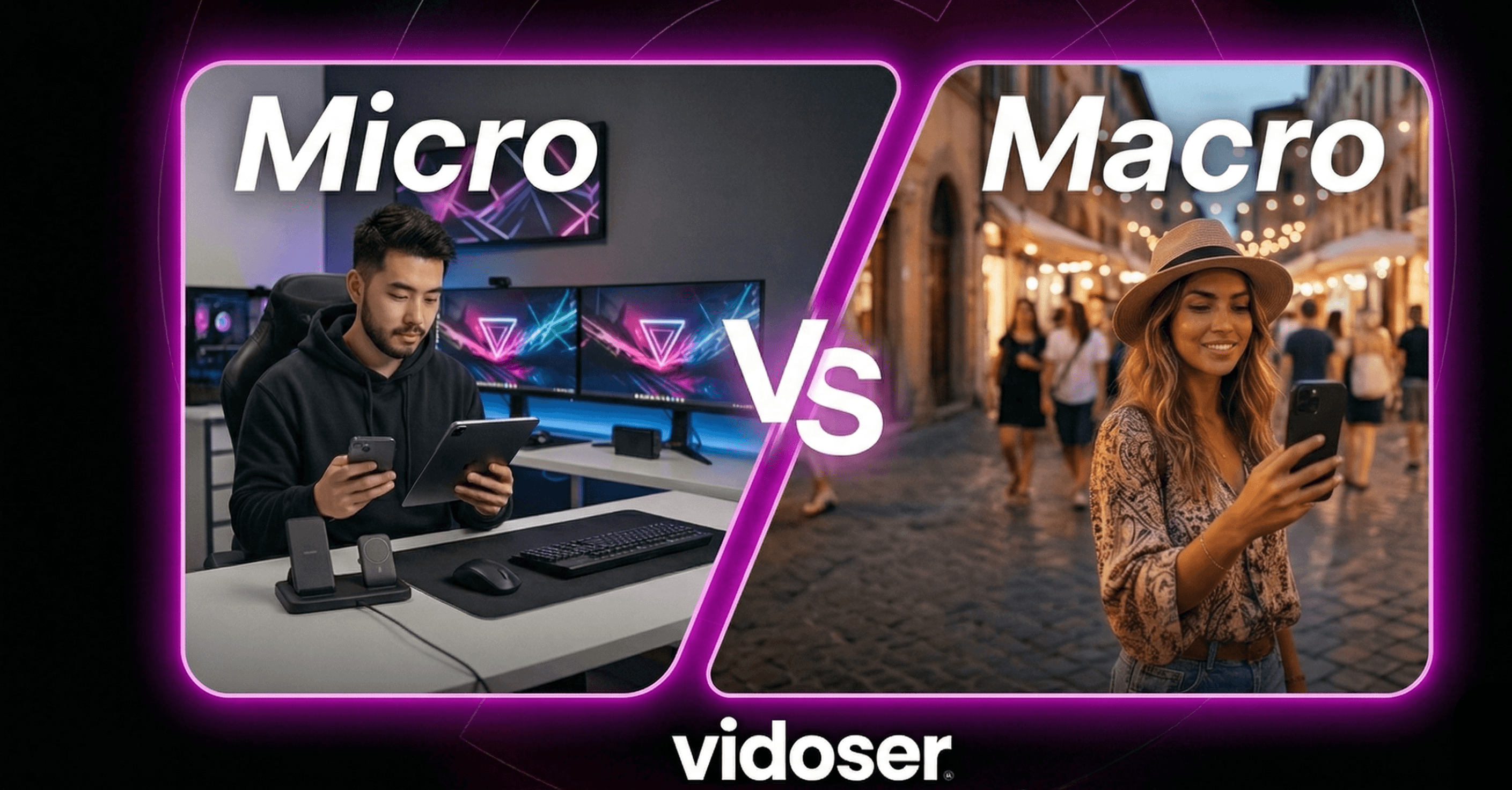
The choice between micro and macro influencers depends strictly on your campaign goals. Macro-influencers offer massive reach for broad brand awareness. Conversely, micro-influencers drive higher engagement, authentic niche relevance, and significantly better conversion rates at a lower cost per acquisition (CPA).
The Data-Driven Difference
When planning a creator marketing strategy, looking at follower counts is the most frequent and costly mistake. Followers measure distribution, not relevance. To make data-driven decisions, you need to understand the structural differences between these two tiers.
Feature | Micro-Influencers (10K - 100K) | Macro-Influencers (500K+) |
Primary KPI | Conversions, ROAS, Trust | Brand Awareness, Reach |
Engagement Rate | High (authentic, active community) | Low to Medium (passive scrolling) |
Cost Efficiency | Highly cost-effective and scalable | High premium, often requires large budgets |
Audience Fit | Hyper-targeted niche | Broad, generic, and fragmented |
Content Style | Native, raw, and highly relatable | Highly polished, studio-like, traditional |
Why Micro-Influencers Dominate ROI
If you cannot answer "how much revenue or leads did this generate?", the methodology needs fixing. Based on Vidoser proprietary data from managing a community of over 50,000 creators across 30+ countries, micro and nano-influencers systematically outperform macro profiles in direct response metrics.
Why? Because communities notice and algorithms reward consistency and authenticity over time. A smaller creator has a closer relationship with their audience. When they recommend a product, it simulates a direct recommendation from a friend, which is the format with the highest trust level.
How to Build Your Strategy in 3 Steps
Stop relying on vanity metrics and start driving real business results. Here is how to practically implement a high-converting influencer strategy:
Define Your True Objective: Before any activity, establish what you want to achieve. If you need to launch a new FMCG product globally, macro-influencers provide the necessary top-of-funnel volume. If you need to drive sales for a D2C e-commerce brand, a network of micro-influencers is your best asset.
Select for Fit, Not Followers: A creator with 15,000 followers in a specific niche often generates better results than one with 500,000 generic followers, at a fraction of the cost. Analyze thematic relevance, value affinity, and engagement quality (real comments vs. bots).
Scale Through Iteration: One-shot collaborations are ineffective. Creator marketing works best with ongoing partnerships. Instead of blowing a $10k budget on one macro-influencer post, distribute it across 20 micro-influencers. Monitor the campaign in real-time, identify the top performers, and reallocate the budget toward them to scale efficiently.
Ready to Scale Your Brand with Creator Marketing?
Managing dozens of micro-influencers manually on spreadsheets drains your team time and kills your margins. Vidoser is the Creator Marketing Operating System that connects brands and creators in a measurable and scalable way. From AI-powered creator selection to automated payouts, we handle the workflow so you can focus on ROI.
You may like