Creator Marketing: What It Is, How It Works, and How to Build a Strategy in 2026
Published on
Written by
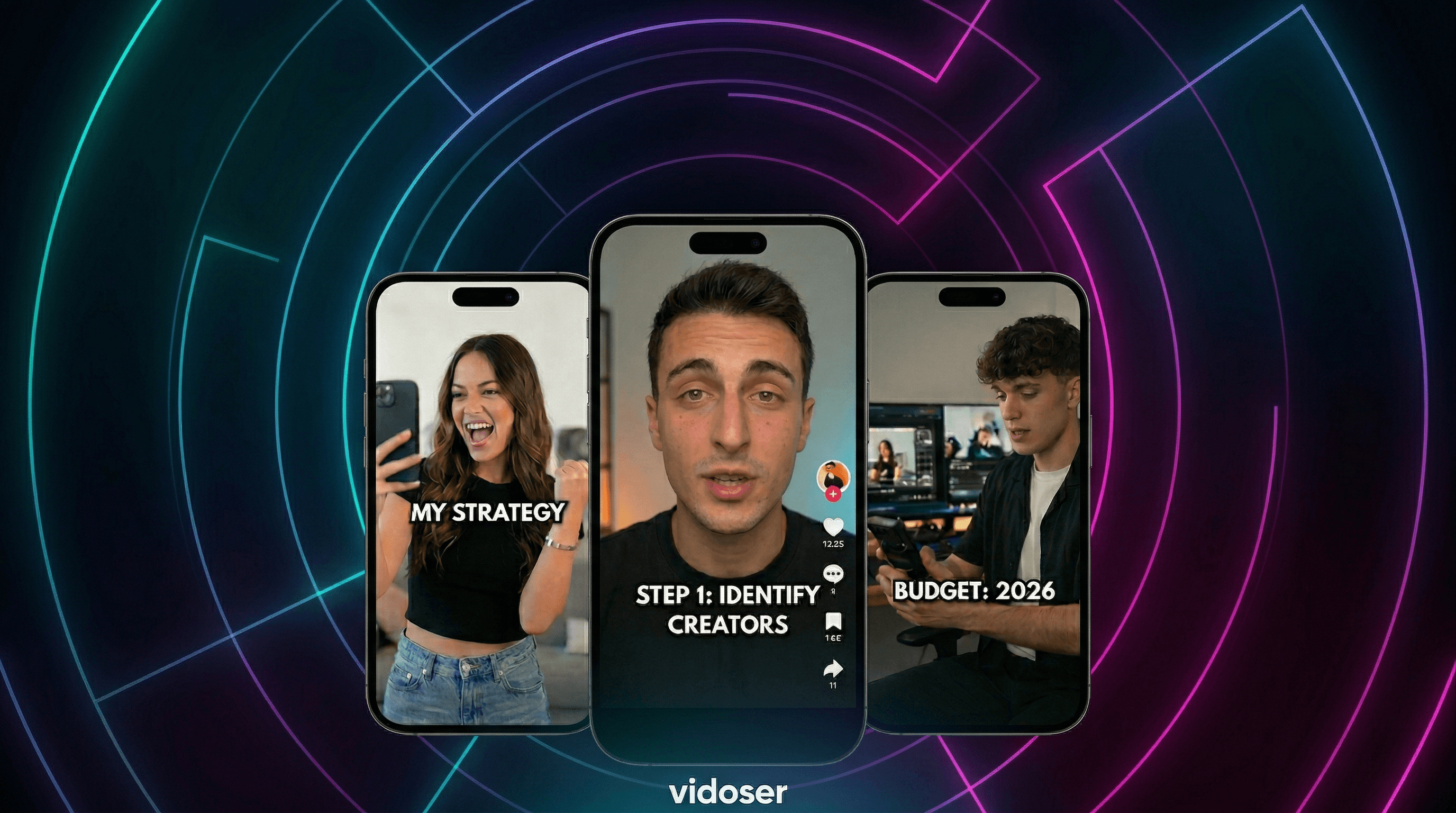
Until a few years ago, digital marketing revolved around a single figure: the Influencer. The goal was simple: find someone with many followers and ask them to publish a post. In 2026, that model is officially obsolete.
Today, we talk about Creator Marketing: a strategy that doesn't just "buy visibility" but integrates various professional figures to produce authentic content, generate authority, and drive sales in a measurable way.
What is Creator Marketing? A Precise Definition
Creator Marketing is the set of strategies through which a brand collaborates with digital professionals to produce and distribute relevant content for its target audience.
Unlike traditional Influencer Marketing, the focus shifts from simple "exposure" (the size of the fanbase) to the quality of the asset produced and the Return on Investment (ROI). In 2026, this approach is no longer a monolith but an ecosystem that integrates four fundamental specializations: Talent reputation, UGC production, Social Commerce drive, and the strength of Brand Ambassadors.
Beyond the Influencer: The New Creator Architecture
The true revolution of recent years is the fragmentation of the market into specific roles. Modern Creator Marketing is the system that identifies the brand's objective and assembles these pieces:
1. The Influencer / Brand Ambassador (General Authority)
The pillar of visibility. They aren't necessarily tied to a technical niche, but over the years, they have built an unbreakable bond of trust with a vast and heterogeneous audience. Their strength lies in charisma and recognizability.
Their role: Lending their image as a "guarantor" of brand quality. They act like traditional media but with the warmth of a human relationship. Often, the collaboration evolves into a long-term Ambassador relationship.
When to use them: To maximize message reach, give immediate prestige to an emerging brand, or consolidate a legacy brand's presence in people's daily lives.
2. The Talent (Niche Authority)
The evolution of the influencer. It’s not about how many followers they have, but how much authority they hold within a vertical niche (tech, sustainability, finance, beauty care).
Their role: Transferring Trust and reputation to the brand.
When to use them: For awareness campaigns, product launches, and positioning the brand as an industry leader.
3. The UGC Creator (Content Specialist)
A figure that has emerged strongly in recent years. The UGC (User Generated Content) Creator doesn't necessarily have their own community; they are a professional in creating native content.
Their role: Producing videos and photos that "don't look like ads." The brand buys the content (not the space on their profile) to use on its own social channels or as creative for Ads.
When to use them: To make brand communication more human, lower video production costs, and increase Ad CTR (Click-Through Rate).
4. The Performance Creator (Social Commerce)
Creators specialized in pure conversion. They are masters of sales language on social commerce channels.
Their role: Driving the user to click and purchase immediately via tracked links and direct reviews.
When to use them: For campaigns oriented toward ROAS (Return on Ad Spend) and direct sales.
How to Build a Strategy in 2026: The 5-Phase Process
"We have moved from Influencer Marketing as 'media' to Creator Marketing as a 'business engine.' Today, it means knowing how to combine the authority of those who built a community with the technical creativity of those who produce native content. It is this data-driven synthesis that allows brands to connect with people authentically and generate a real impact on results." — Alessandro La Rosa, CEO of Vidoser
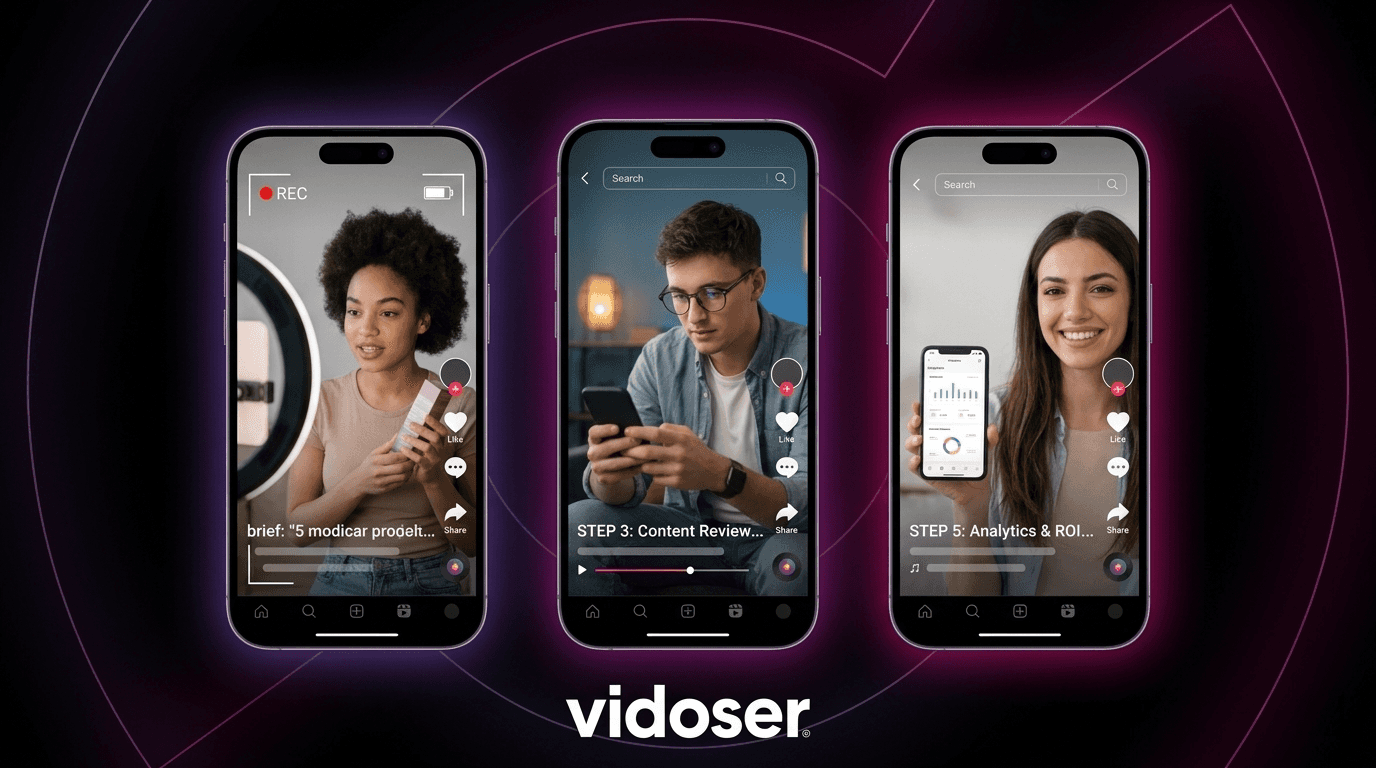
Defining the Mix: Before KPIs, establish the necessary combination. Do you need the authority of a Talent to validate the product or the volume of content from 20 UGC Creators to fuel your seasonal campaigns? A strategy often involves a hybrid of both.
Selection by Affinity and Assets: Forget follower counts. In 2026, we select creators based on:
Production Quality: (Essential for UGC).
Community Sentiment: (Essential for Talents).
Historical Conversion Data: (Essential for Social Commerce).
The Brief as a Co-creation Tool: The brief shouldn't be a cage, but a compass. Creators know their audience’s language better than the brand. Provide objectives and "non-negotiables," but leave room for native creativity.
Hybrid Distribution and Optimization: Creator content shouldn't die on their profile. A winning strategy in 2026 includes Whitelisting (using the creator's profile to run brand-sponsored Ads) and integrating produced assets into other corporate channels (website, newsletters, points of sale).
Business Impact Analysis: Beyond vanity metrics, we measure real impact: increased Ad conversion rates thanks to UGC, growth in qualified traffic, and improved brand reputation.
Errors to Avoid Today
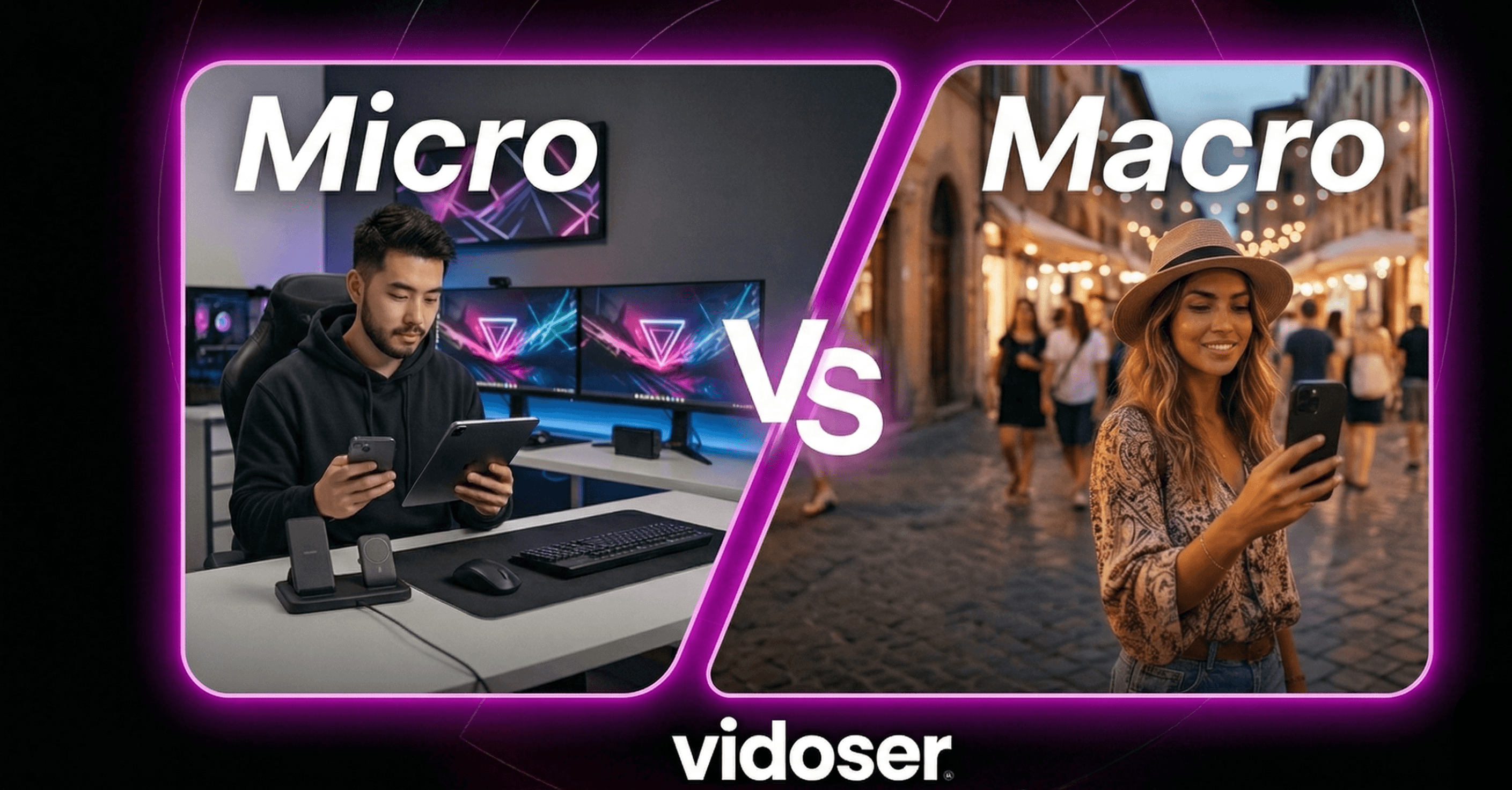
Chasing "Big Names" Only: Often, 10 vertical micro-talents bring more conversions than a single celebrity.
Not Owning Usage Rights: With UGC, the value lies in being able to reuse that video in your campaigns for months. Ensure contracts are clear.
Lack of Continuity: Creator Marketing works like compound interest. Ongoing partnerships create a much more credible narrative than one-off activations.
Transform Your Brand with a Scalable System
The market has shifted from "buying posts" to "building content ecosystems." Vidoser possesses the technology, data, and access to the best Talents and UGC Creators to transform your communication into a measurable growth engine.
Ready to build your creator team for 2026? Contact us!
You may like